Electrical Plant Maintenance with BIM: The Digital Revolution that Prevents Multimillion-Dollar Losses
Introduction: When Every Minute of Downtime Costs Thousands of Dollars
When the main generator of Santiago’s power plant failed at 3 a.m., the maintenance team faced a scenario everyone feared. Without immediate access to updated drawings and without being able to quickly locate critical components, the downtime hours multiplied, generating multimillion-dollar losses.
This story, unfortunately common in the energy industry, is changing thanks to the implementation of electrical plant maintenance with BIM.. According to the Institute of Electrical Engineering, plants that adopt BIM methodologies reduce their maintenance times by up to 40% and decrease operating costs by an average of 25%.
BIM technology is revolutionizing the way we manage and maintain critical infrastructure, enabling instant access to vital information and accurate prediction of potential failures. In this article, you will discover how BIM is transforming electrical maintenance, from preventive planning to real-time emergency resolution.
What Is BIM in the Context of Electrical Plants?
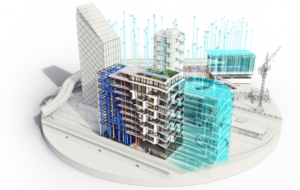
Building Information Modeling (BIM) in electrical plants goes beyond 3D modeling; it is a comprehensive methodology that creates digital twins of the entire electrical infrastructure, from generators and transformers to cable trays, panels, and MEP systems.
In this context, BIM works as the digital brain of the plant,concentrating:
- Technical specifications of each component
- Maintenance and performance history
- Real-time IoT data (temperature, vibration, voltage)
- Safety and preventive maintenance protocols
- Associated costs and inspection scheduling
Read also: Predictive Maintenance in Electrical Plants: Anticipating Issues with 3D Scanning and BIM
Predictive vs. Traditional Maintenance: The BIM Difference
|
Aspect |
Traditional maintenance |
Maintenance with BIM |
|
Planning |
Reactive, failure-based |
Predictive, data-based |
|
Access to information |
Scattered physical drawings |
Centralized digital model |
|
Diagnosis |
2–4 hours on average |
15–30 minutes |
|
Location |
Approximate |
Millimetric, 3D navigation |
|
Inventory |
Reactive |
Predictive and optimized |
|
Documentation |
Manual, on paper |
Digital and automated |
With BIM, technical staff access updated 3D models, detect failures in advance, and carry out maintenance tasks that are safer, faster, and more cost-effective.
Integrated Technologies: IoT, AI, and Predictive Maintenance
Internet of Things (IoT)
IoT sensors turn the BIM model into a living digital twin, capable of alerting about anomalies before they occur.
Application examples:
- Thermal sensors on transformers to detect overheating.
- Vibration monitors on rotating generators.
- Thermographic cameras to prevent short circuits
Predictive Artificial Intelligence
Machine learning algorithms analyze thousands of data points from the model in order to:
- Predict failures with 90% accuracy.
- Recommend optimal preventive maintenance.
- Adjust intervention times according to actual wear.
Quantifiable Benefits
- Reduction of unplanned downtime: 35–50%
- Inventory optimization: 20–30%
- Reduction of maintenance costs: 25–40%
- Increase in equipment lifespan: 15–25%
Practical Implementation: FOUNDTECH Methodology
Phase 1: Millimetric-Precision Scan2BIM
3D capture of electrical components with high-precision laser scanners.
Includes QR identification and a complete digital record of each piece of equipment.
Phase 2: Specialized BIM Modeling
Intelligent modeling with Autodesk Revit MEP and Bentley, integrating:
- Parametric families
- Maintenance protocols
- Connection to SCADA and CMMS
Phase 3: Platform Integration
Connection of the BIM model with:
- ERP (cost and resource management)
- CMMS (maintenance control)
- IoT systems for continuous monitoring
The Future of Electrical Maintenance: 2024–2030 Trends
1. Augmented Reality (AR) in the Field
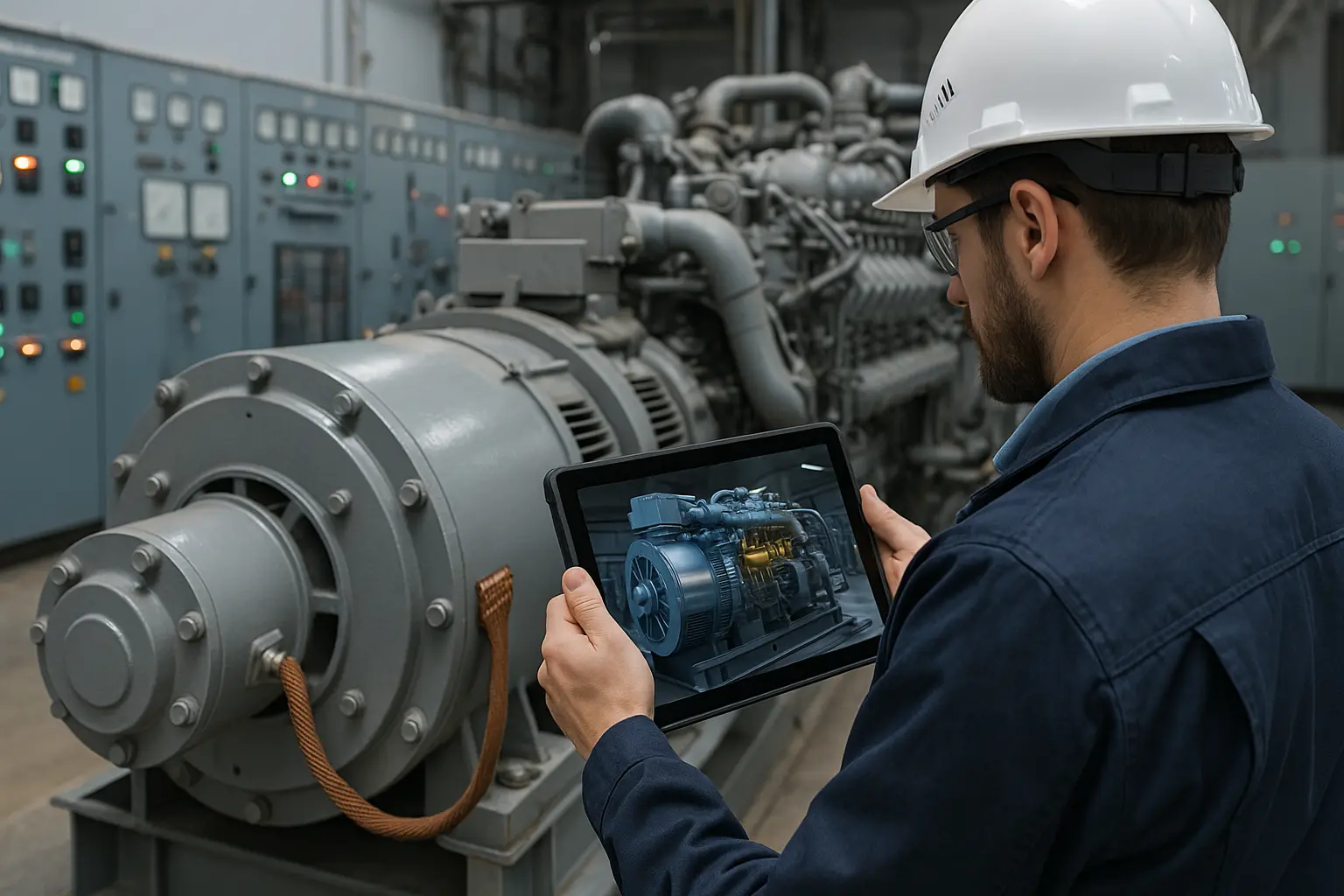
Technicians will visualize BIM information overlaid on real equipment using headsets or tablets, with real-time instructions and automatic task logging.
2. Autonomous Digital Twins
Electrical models will evolve towards continuous self-learning, detecting anomalies, generating maintenance work orders, and adjusting parameters without human intervention.
3. Sustainable Energy and Efficiency
Electrical digital twins will integrate simulations of energy consumption and emissions, enabling resource optimization and compliance with ESG goals.
4. Full Integration with Generative AI
The next step will be integration with generative AI systems capable of proposing automatic redesigns of panels, electrical routes, and redundancy schemes.
Conclusion: The New Era of Energy Maintenance
Maintenance of electrical plants with BIM is not a trend but a structural change in the way critical infrastructure is managed. The combination of 3D scanning, IoT sensors, and predictive analytics enables comprehensive, proactive, and efficient management, minimizing risks and losses.
AtFOUNDTECH, we have verified that every project that adopts BIM not only reduces its costs but also gains full control over its electrical operations. From hospitals to industrial plants, the future of energy is digital, and it begins with an intelligent model.
Request specialized consultinganddiscover our digital twin projects.