7 Digital Twin and BIM Trends That Will Transform Construction
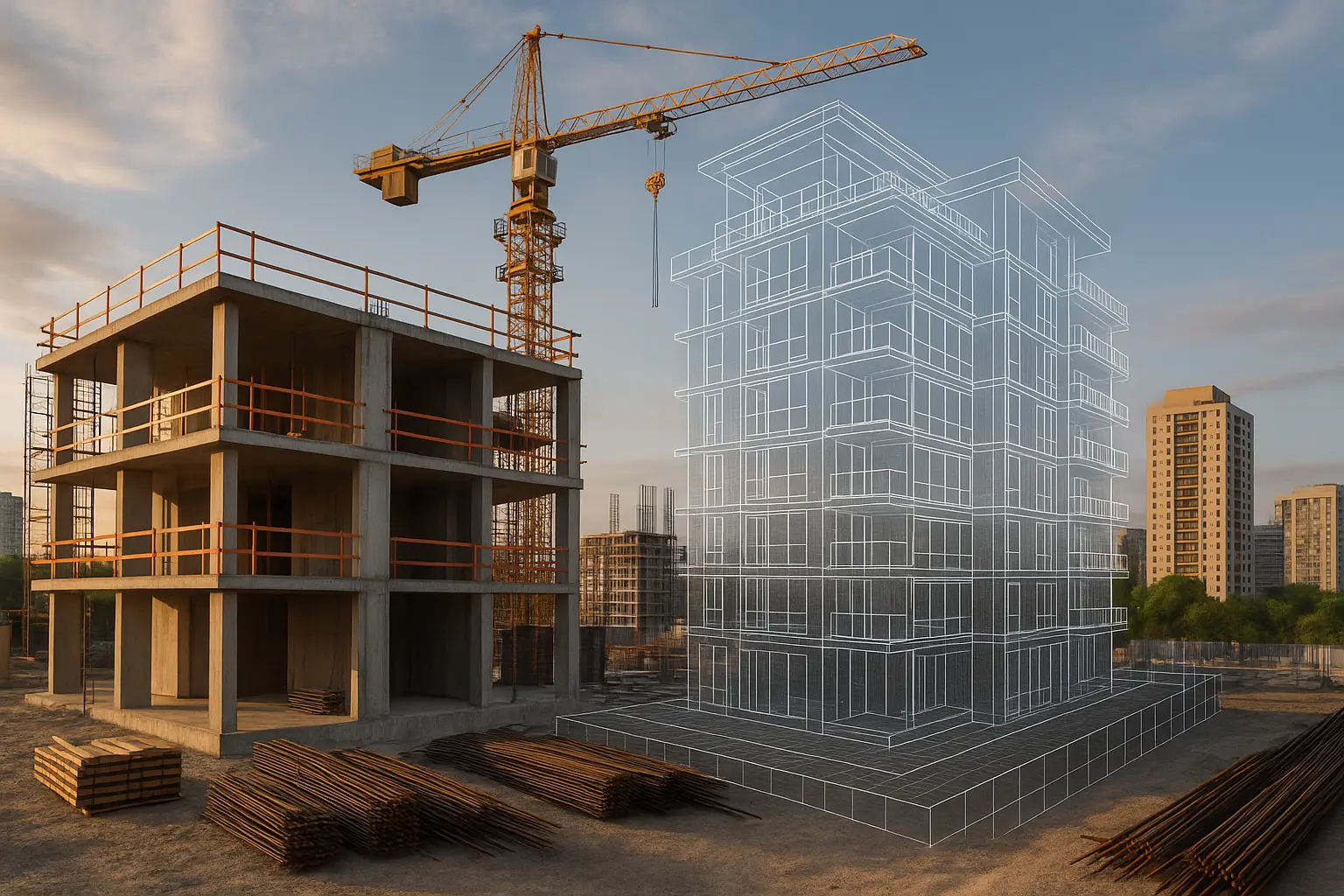
The Mexican construction industry faces its greatest transformation in decades. While material costs increased 18% in the past year and project delays cost millions in penalties, visionary companies are already implementing BIM technology in construction and digital twins to reduce waste by up to 30% and accelerate deliveries by 40%.
The digital twin trends we identified for 2026 are not speculation: they are realities that are already transforming hospitals, shopping malls, industrial plants, and hotel developments from Tijuana to Cancun.
Total AI Integration with BIM Models: The Digital Brain of Your Project
Artificial is no longer a complement to BIM; in 2026 it will be its operational core. The algorithms of will analyze millions of historical construction data to predict with 94% accuracy where
Sectoral Implementation Cases:
Hospitals and Health Centers: BIM Models with AI
optimize patient flows, predict maintenance needs for critical medical equipment and simulate emergency evacuations. Ángeles Hospital in Querétaro reduced 23% of its annual operating costs by implementing this technology.
Hotels and Resorts: AI integrated with BIM analyzes occupancy patterns, energy consumption, and facility wear to schedule predictive maintenance.
Logistics Centers: Amazon and Mercado Libre use BIM+AI to design warehouses that reduce picking times by 35% through the automatic optimization of layouts and forklift routes.
The Digital twin prediction with AI also allows for the simulation of structural behavior under earthquakes specific to each Mexican seismic zone, complying with NOM-017-ENER-2012 and anticipating necessary reinforcements before construction.
Read also:How BIM Transforms the Planning of Logistics Centers and Retail Spaces
Real-Time Digital Twins: From Static Model to Living Building
The benefits of BIM in construction evolve towards dynamic ecosystems where each IoT sensor continuously feeds the digital twin. By 2026, 78% of new corporate buildings in Mexico City, Monterrey, and Guadalajara will be built with their «digital twin» active from day one.
Enabling Technologies of the Living Digital Twin
- Next-Generation IoT Sensors
- Structural Vibration Measurement Every Millisecond
- Air quality analysis with 15 simultaneous parameters
- Microcrack Detection Using Continuous Ultrasound
- Thermal Monitoring for Fire Prevention
- Edge Computing for Instant Processing
- On-Site Data Analysis with Zero Latency
- Immediate Alerts for Structural Anomalies
- 70% Reduction in Data Transmission Costs
- Hybrid Cloud Platforms
- Microsoft Azure Digital Twins
- AWS IoT TwinMaker
- Autodesk Tandem
- Bentley iTwin
BIM Architecture 2026: Generative Design and Automatic Optimization
The Future of Digitalization in Architecture It transcends manual modeling. Generative design algorithms will create thousands of optimized variations of a project in minutes, considering budget constraints, local regulations, energy efficiency, and even social impact.
Generative BIM Design Benefits by Industry
Benefits of Generative BIM Design by Industry
- Residential Developments: Maximization of views and natural light for each unit
- Optimization of common spaces according to target demographics
- 28% reduction in HVAC costs
Industrial Plants:
- Automatic design of optimal evacuation routes
- Minimization of material handling
Shopping Centers:
- Distribution of stores according to pedestrian traffic algorithms
- Acoustic optimization to reduce environmental noise
- Acoustic optimization to reduce environmental noise
Read also: Success Stories Foundtech
Extended Reality (XR) in Construction: From the Shell to the Metaverse
The Convergence of Augmented Reality (AR), Virtual Reality (VR) and Mixed Reality (MR) will radically transform how we visualize, construct, and maintain buildings. By 2026, 65% of projects over 50 million pesos will use XR at some stage.
Revolutionary XR + BIM Applications
- Holographic Construction Inspection
Supervisors visualize BIM models superimposed on the actual construction site using HoloLens 3 or Apple Vision Pro, detecting deviations in real time. - Immersive Safety Training
Workers practice procedures in virtual environments, reducing workplace accidents by 67%. - Real Estate Sales in the Metaverse:
Buyers virtually tour unbuilt developments and customize finishes in real time. - AR-Assisted Maintenance:
Technicians view instructions on physical equipment, reducing repair times by 45%.
Blockchain for BIM: Total Traceability and Smart Contracts
Blockchain technology will guarantee the integrity of BIM models and automate payments through smart contracts. Every modification is recorded, eliminating legal disputes that currently represent 8% of the total construction cost.
Key Implementations for 2026
- Digital Certification of Materials
- Automatic Advance Payments
- Real-Time Auditing
- Tokenization of Real Estate Projects
|
Blockchain-BIM Benefits |
Cost Reduction |
Time Savings |
|
Elimination of Intermediaries |
15-20% |
30 days average |
|
Fraud Prevention |
8-12% |
— |
|
Automated Audits |
25-30% |
45 days average |
|
Dispute Resolution |
40-50% |
60-90 days |
Sustainability Driven by Digital Twins: Net Zero 2026
The climate emergency makes digital twins key tools for achieving Net Zero buildings. They don’t just shape: they optimize energy consumption in real time, reducing emissions by up to 45%.
Digital Sustainability Strategies by Sector
Hotel Sector:
- Smart Climate Control Based on Occupancy
- Hot Water Usage Prediction
- Circadian-Adapt Lighting
Manufacturing Industry:
- Waste-Free Process Simulation
- Waste Heat Recovery
- Internal Logistics Optimization
Educational Centers:
- Bioclimatic Design Adapted to the Climate
- CO2 Monitoring for Automatic Ventilation
- Solar Generation Simulation with BIM Models
BIM-Guided Robotic Automation: Construction Without Human Error
By 2026, construction robots will follow instructions from BIM models, eliminating human error and accelerating construction up to 10 times
Integrated BIM Robotic Technologies
- Autonomous Inspection Drones
Detect defects by comparing actual progress vs. BIM model. - Precision Bricklaying Robots.
Lay bricks with a 0.5 mm tolerance and 6x the speed of a human. - 3D Concrete Printers
Construct curved walls and complex structures without formwork. - 3D Concrete Printers
Construct curved walls and complex structures without formwork.
Adoption in Mexico: Challenges and Opportunities
Although Mexico has an accessible workforce, robotics will be essential for:
- Projects in high-risk areas (refineries, laboratories)
- Construction in extreme climates
- Buildings with ultra-precision requirements
The Future Is Here: Is Your Company Ready?
BIM and digital twin trends are no longer futuristic: they are competitive requirements in 2026. From robotic automation to blockchain traceability, these technologies are redefining the foundations of the construction sector in Mexico and Latin America.
What should companies do today?
- Digitize your asset inventory with Scan-to-BIM
- Implement predictive maintenance pilots
- Evaluate your energy consumption with Net Zero
- Prepare for tenders requiring blockchain and BIM
- Adopt extended reality as a construction standard
FOUNDTECH has already supported several companies in this transition. And you, are you going to be left behind?
Request a free consultation →And learn how to apply BIM, digital twins, and automation to your project with measurable returns from the first quarter.