5 Key Benefits of Digital Twins in Real Estate Management
Digital twins turn buildings and real estate portfolios into intelligent assets capable of predicting failures, optimizing energy, and improving profitability throughout their entire life cycle.
What is a digital twin in real estate management?
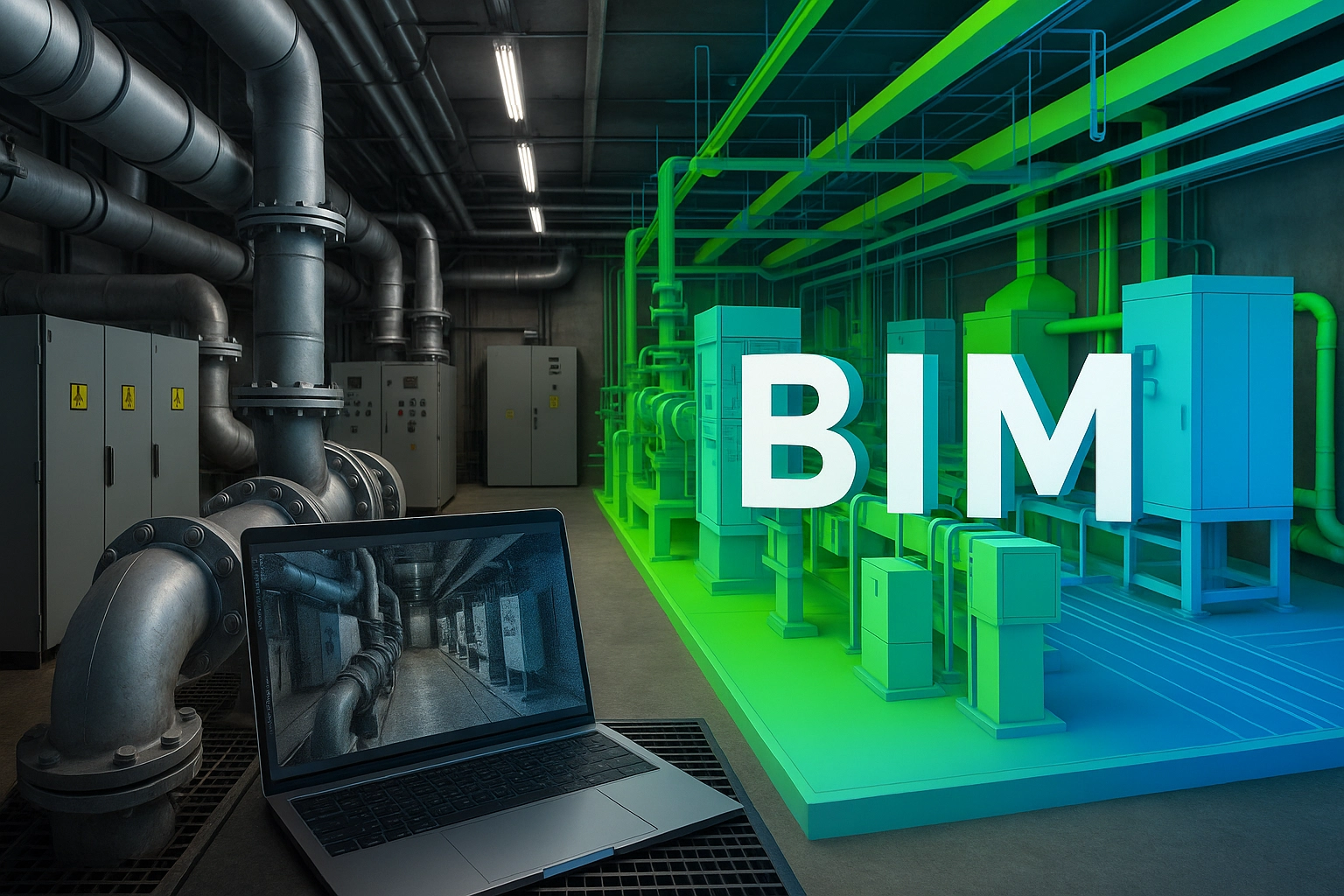
A digital twin is a dynamic virtual replica of a physical asset—such as a corporate building, hospital, hotel, or logistics center—that integrates BIM models, operational data, and real-time signals from IoT sensors and BMS systems. This representation makes it possible to visualize, analyze, and simulate the behavior of the property without interrupting its operation.
In the FOUNDTECH, ecosystem, digital twins are built fromScan-to-BIM, high-precision BIM models, and data platforms that centralize all relevant information about the asset, enabling use cases in maintenance, energy, operations, and user experience
Read more about how these models are created on the Foundtech blog: Scan to BIM: Transforming 3D Scanning into Actionable Data.
1. Predictive maintenance: from firefighting to staying ahead
Predictive maintenance is one of the clearest and most profitable benefits of implementing digital twins in buildings. Instead of waiting for equipment to fail (reactive maintenance), the digital twin analyzes historical and real-time data to anticipate failures and schedule interventions at the optimal moment.
We suggest reading: Optimize Maintenance: Digital Twins, AI, and More.
How it works
A digital twin integrates data from:
- HVAC systems:temperatures, pressures, consumption, vibrations.
- Electrical equipment:: loads, temperatures, phase imbalances.
- Hydraulic systems:flow rates, pressures, possible leaks.
- Elevadores y sistemas mecánicos: cycles, travel times, abnormal stops.
With advanced analytics, the models identify patterns of deterioration and trigger early alerts to intervene before a critical failure, significantly reducing reactive maintenance. According to data cited by the U.S. Department of Energy, predictive maintenance can deliver savings of up to 40% compared to reactive maintenance, as well as extending asset life..[inspektai]
FOUNDTECH details this approach in its content on maintenance with digital twins, explaining how data analysis makes it possible to schedule condition-based interventions, not just calendar-based ones.
2. Remote monitoring: full control from anywhere
Digital twins make it possible to monitor entire buildings and portfolios without constant physical presence, which is especially valuable for networks of stores, hotels, or distributed industrial warehouses.
What remote monitoring enables
- Navigable 3D view of the property with superimposed system statuses.
- Centralized dashboards with KPIs for energy, comfort, occupancy, and maintenance.
- Real-time alerts for abnormal behavior (atypical consumption, temperature variations, technical alarms).
- Historical dataand trends for analysis and comparisons between assets.
In chains with multiple locations, this translates into fewer unscheduled visits, better incident prioritization, and the ability to compare performance between sites to replicate best practices. Foundtech’s content on digital twin trends highlights precisely this multi-site role in real estate and construction.
3. Operational and energy optimization
The day-to-day operation of a real estate asset accounts for a large share of its costs; in commercial buildings, energy is estimated to represent around one third of non-fixed operating expenses. With a digital twin, management shifts from static rules to continuous data-driven optimization.
Optimization examples
- Energy: adjust HVAC and ventilation based on occupancy, weather, and time-of-use tariffs, reduce demand peaks, and eliminate unnecessary consumption.
- Spaces: analyze usage patterns to consolidate underutilized areas, adapt layouts, and better size the portfolio.
- Assets:optimize equipment operating times, rotation, and replacement strategies.
Foundtech emphasizes that nearly 80% of the benefits of a digital twin are captured during the operational phase of the asset, , precisely when these optimizations can be sustained for years. This makes the digital twin a direct enabler of profitability, not just a technical tool.
4. Improved user experience and comfort
In offices, hotels, hospitals, or retail, the quality of the user experience is a critical value factor. Digital twins make it possible to adapt the building around people, not the other way around.
Typical use cases
- Thermal comfort and air quality:adjust HVAC based on occupancy, CO₂, and other indoor environmental quality parameters.
- Wayfinding and operations: integrate the twin with indoor navigation or space-booking applications to improve building use.
- Security: coordinate access control systems, video surveillance, and evacuation routes on an up-to-date model.
Foundtech articles on digital twin and BIM trends highlight how these models are increasingly used to create healthier, more sustainable, and user-centered environments aligned with well-being goals and certifications such as WELL.
5. Data-driven decision-making throughout the life cycle
A digital twin consolidates design, construction, and operation information, becoming a single source of truth for all stakeholders: owners, facility managers, operators, technicians, and executives.
Decisions it improves
- CapEx:prioritizing equipment replacements and renovations based on actual performance and risk projections
- OpEx:adjusting service, maintenance, and energy contracts backed by historical data.
- Sustainability::defining interventions to reduce energy consumption and carbon footprint with more accurate impact estimates
- Strategic planning: : analyzing “what-if” scenarios (changes in occupancy, expansions, new technologies).
Foundtech addresses this life-cycle vision in several pieces of content on digital twins and BIM, stressing that these models not only accompany construction but are long-term tools for real estate business management.
Conclusion: from passive asset to intelligent asset
Digital twins are changing how real estate assets are designed, operated, and valued, shifting management models from reactive to predictive, connected, and data-driven approaches. From predictive maintenance to energy optimization and user experience, their benefits are concentrated precisely in the stage where the asset spends most of its life and where—as Foundtech points out—around 80% of the value of this technology is generated.
For real estate managers, owners, and operators, the question is no longer whether to digitalize or not, but how to build a digital twin aligned with their business and sustainability objectives. Relying on methodologies such as Scan-to-BIMon digital twin platforms, and on the expertise of specialists like FOUNDTECH makes it possible to turn buildings into intelligent assets that learn, self-optimize, and protect profitability over time.
Be part of this revolution; contact us to get a diagnosis for your company.