Digital twins of historical sites: INAH inspiration to preserve and connect heritage
Cultural heritage conservation is experiencing an authentic revolution. Digital twins, three-dimensional digital models that reproduce with millimeter precision the physical state of a building or object, have become essential allies for museums and historical sites.
In Mexico, the National Institute of Anthropology and History (INAH) leads numerous projects for the digitization of heritage assets; its experience not only inspires researchers from all over the world, but also shows the potential of these tools for the digitization of historic buildings and the intelligent management of heritage assets.
In this entry, we will explore how INAH’s efforts have laid the groundwork for creating digital twins of historical sites, what technologies are used, and why this methodology is crucial for the preservation and dissemination of heritage.
Additionally, we will explain how at Foundtech we apply this knowledge to develop digital twins in heritage architecture, integrating BIM and IoT for conservation and management projects. At Foundtech, we apply this knowledge to develop digital twins in heritage architecture, integrating BIM and IoT for conservation and management projects.
If you want to learn firsthand about digitalization and conservation projects in Mexico, you can consult the official institute portal at inah.gob.mx, where you will find news, research, and resources on cultural heritage.
What is a heritage digital twin?
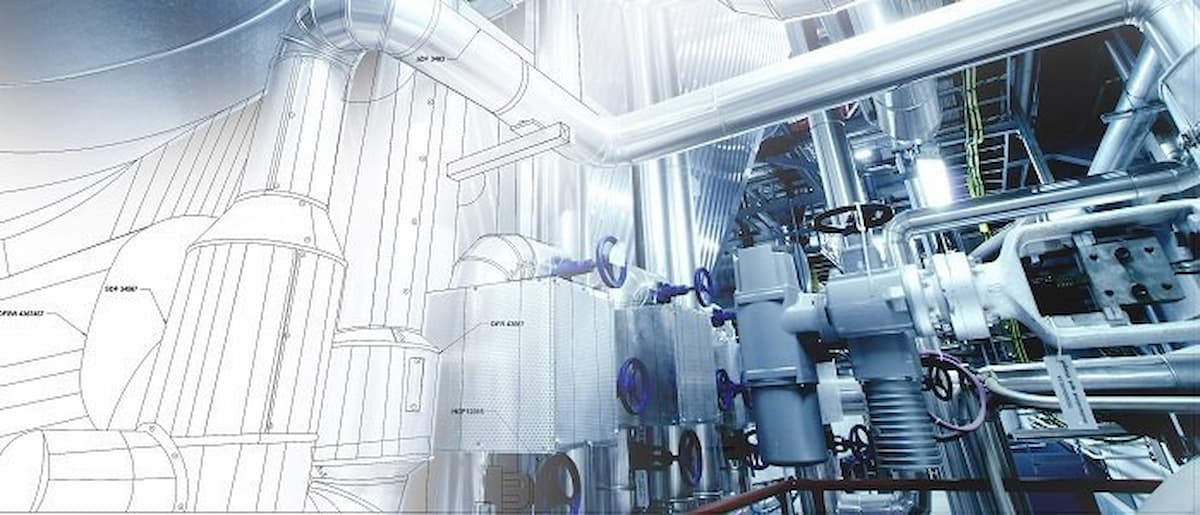
A digital twin is an exact virtual replica of a physical object or infrastructure. -Unlike classical photogrammetry, the digital twin combines 3D modeling, real-time data (IoT sensors) and predictive analysis to create a living model.
-In historical heritage, this means that a digital twin not only shows the geometry of a building or artifact, but can also reflect its structural state, the evolution of materials, and even behavior in response to environmental changes. -It is, in essence, an -intelligent model that allows studying the past, monitoring the present, and planning the future of a cultural asset.
-The INAH example: a collection of 85 3D models of Mexican heritage
One of the most outstanding initiatives is the project of the National Coordination of Historical Monuments (CNMH) of the INAH, which has developed a collection of 85 three-dimensional models -of architectural and archaeological monuments.Through 3D scanning technology (laser and photogrammetry), iconic buildings such as the National Palace, the Ex Convent of the Deserts of the Lions, the Metropolitan Cathedral, and the Templo Mayor have been modeled.Through 3D scanning technology (laser and photogrammetry), iconic buildings such as the National Palace, the Ex Convent of the Desert of the Lions, the Metropolitan Cathedral, and the Templo Mayor have been modeled. – Through 3D scanning technology (laser and photogrammetry), iconic buildings such as the National Palace, the Ex Convent of the Desert of the Lions, the Metropolitan Cathedral, and the Templo Mayor have been modeled.
-This project aims to process digital data to learn in greater detail the planimetry and altimetry of the monuments, conduct structural analyses, and document constructive details. -All this information provides a complete overview for intervention and preservation.Additionally, the CNMH has created a team of 3D scanning specialists to promote three-dimensional surveys of immovable and movable assets thanks to support from the National Council of Science and Technology. Through 3D scanning technology (laser and photogrammetry), iconic buildings such as the National Palace, the Ex Convent of the Desert of the Lions, the Metropolitan Cathedral, and the Templo Mayor have been modeled.
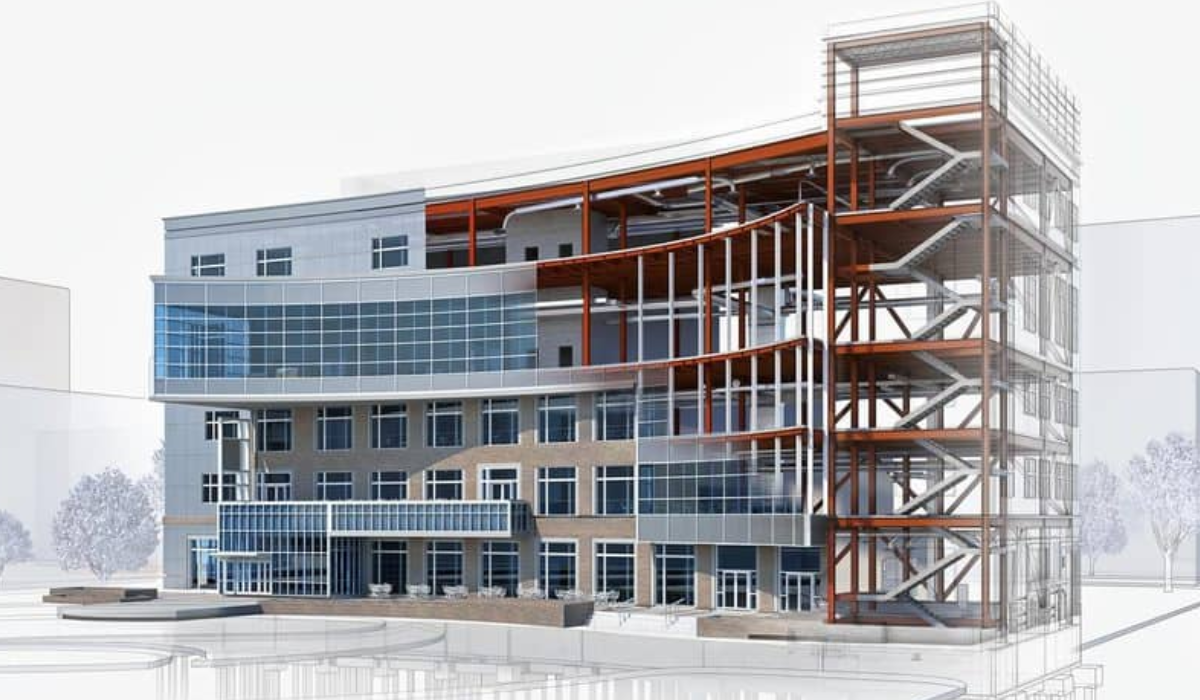
These models are not simple 3D ‘photographs’; they are true digital twins that can be analyzed with BIM tools, integrated with databases, and used in augmented reality applications for cultural dissemination.
The INAH’s strategy demonstrates that digital twins are an effective tool for scientific knowledge and bringing heritage closer to the population.
-Laboratory of Documentation and Three-Dimensional Analysis (Lab3D)
Another pioneering initiative of the INAH is the Laboratory of Documentation and Three-Dimensional Analysis (Lab3D) -of the National Coordination of Heritage Conservation This laboratory is dedicated to documenting cultural assets using 3D digitization techniques and three-dimensional analysis.According to the magazine Conservation and Restoration, the Lab3D has demonstrated that these technologies allow documenting in a precise and rapid manner
According to the journal Conservation and Restoration, Lab3D has demonstrated that these technologies allow for accurate and rapid documentation -a wide variety of cultural assets, revealing details that are not perceptible to the naked eye. 3D models facilitate useful interpretations for diagnosis and allow monitoring of the condition of the pieces in order to propose conservation actions*.
-Additionally, digital models can be studied by archaeologists and conservators even if the assets are reburied or lost; they serve for educational and dissemination purposes and promote inter-institutional collaborations, since the models can be consulted remotelyThe implementation of 3D documentation technologies has changed the way research and collaboration are conducted, opening the door to new ways of disseminating heritage through digital platforms and physical replicas.*. The implementation of 3D documentation technologies has changed the way we research and collaborate, opening the door to new ways of disseminating heritage through digital platforms and physical replicas.
-Document with laser and create digital twins in infrastructure projects
The work of INAH is not limited to the documentation of museums and temples.
-In collaboration with foreign institutions, the institute has used laser scanners and photogrammetry to document caves and archaeological sites affected by megaprojects. An article from Qualcomm Institute at the University of California, San Diego recounts how INAH researcher Helena Barba Meinecke asked American specialists to return to Quintana Roo to perform laser scans of known and recently discovered sites during the construction of the Tren Maya*.
–According to the article, in 2015 the UC San Diego team had already worked with the INAH in caves on the Yucatan Peninsula, combining laser scanning and photogrammetry data to create an interactive digital twin -of an underground Mayan sanctuary. In the most recent campaign, the goal was to use advanced technology to generate detailed 3D models that would allow archaeologists and railway project managers to make informed decisions about routes and preservation.
-The researchers explain that these models are used to create virtual representations and immersive tours; the combination of LiDAR and structure from motion generates a digital twin which can be viewed in virtual reality laboratories.
-In this way, INAH not only documents the sites before they can be damaged, but also share the data with authorities to protect the heritage.
-Benefits of digital twins in heritage conservation
-Based on INAH’s experience and international academic projects, several clear advantages of digital twins for heritage architecture can be identified:
- -Preservation without contact: -Preservation without contact: -In the case of the Codex Boturini, digitized by the INAH and accessible online, the digital reproduction allows examining each stroke without risk of deterioration. -Digital twins allow analyzing objects and structures without physically handling heritage.
- -In-depth analysis: -3D documentation reveals details not visible to the naked eye and allows for structural, planimetric, and material analysis to plan interventions. -The CNMH highlighted that its models provide information on planimetry, altimetry, and constructive details for preservation.
- -In-depth analysis: -Planning interventions: -A digital twin facilitates simulating different restoration or consolidation scenarios before intervening on site.
- -Dissemination and virtual tourism: -Planning interventions: -The INAH plans to develop augmented reality products to improve cultural dissemination. -The models can be used in virtual and augmented reality applications.Dissemination and virtual tourism:
- Investigación remota y colaboración: La digitalización 3D permite a investigadores de todo el mundo acceder a la información sin trasladarse, como señala el Lab3D: los modelos digitales pueden consultarse a distancia, fomentando la cooperación y el intercambio Remote research and collaboration:académico*.
- -Predictive maintenance: Cuando se combinan con sensores IoT, los gemelos digitales permiten monitorizar condiciones de temperatura, humedad o vibración en tiempo real y anticipar deterioros. -This approach is already used in conservation projects at Monte Albán, where environmental sensors are integrated to predict wear and optimize visitor routes.
-INAH inspiration and Foundtech’s proposal
-INAH inspiration and Foundtech’s proposal -As a specialized digitization and BIM agency, Foundtech is inspired by INAH’s experience to apply digital twins in architectural and heritage projects. Our methodology combines:
- High-precision 3D laser scanning and photogrammetry, to capture the geometry and texture of historic buildings with errors less than one millimeter.
- Specialized BIM modeling, where each element (walls, columns, roofs) is modeled parametrically and includes material and construction system information.
- -Integration with IoT sensors, which feed the model with temperature, humidity, or deformation data to create living digital twins.
- Advanced visualization, using virtual and augmented reality, that allows you to explore heritage sites without physical travel.
- Predictive maintenance plans, based on data analysis and artificial intelligence, that anticipate failures and optimize interventions.
-These tools not only improve the management of old buildings, but also enable museums, universities, and governments to explore new forms of dissemination and education.
If you wish to learn more about our digital twin and BIM services, visit our services page or check out our blog to find articles on heritage digitization and Scan2BIM.
-Challenges and considerations for adopting heritage digital twins
Although the benefits are clear, implementing digital twins in historical sites presents some challenges:
- -Initial cost: Acquiring scanning equipment, software, and personnel training can be expensive. However, savings from incorrect restorations and risk reduction offset the investment.
- Interoperability and standards: It is essential to use open formats and follow standards (such as ISO 19650 for BIM) that ensure that the models are reusable and accessible in the long term.
- Training: The success of a project depends on multidisciplinary teams: archaeologists, engineers, conservators, and modeling specialists must understand how to leverage the generated information
- Data protection: The disclosure of complete templates of sensitive sites must be managed with security and privacy policies to prevent misuse or looting.
-Conclusion: a new way to conserve and explore heritage
The Digital Twins of Historic Sites
Digital twins of historic sites represent a revolutionary advance in cultural heritage conservation. -Thanks to INAH projects, it is now possible to create digital replicas that preserve the memory of buildings and objects, allow advanced scientific analysis, and make knowledge accessible to a global audience.The CNMH initiative with its 85 3D models of monuments and Lab3D’s work demonstrate that digitization is not just a trend; it is a strategic tool for safeguarding history.-
International collaborations, such as the one developed with UC San Diego to document Mayan caves, show that these techniques can be adapted to infrastructure projects and urgent rescue. Colaboraciones internacionales, como la desarrollada con UC San Diego para documentar cuevas mayas, muestran que estas técnicas pueden adaptarse a proyectos de infraestructura y rescate urgente*.
En un mundo donde el cambio climático y el turismo amenazan los bienes patrimoniales, los gemelos digitales ofrecen una solución para proteger, investigar y difundir nuestro legado cultural. In Foundtech, vemos en estas experiencias una fuente de inspiración y una oportunidad para aplicar lo aprendido al ámbito de la arquitectura contemporánea, la rehabilitación de edificaciones históricas y la creación de ciudades inteligentes.
If you’re interested in exploring how digital twins can transform your heritage or architectural project, contact us.. Together we can build a bridge between history and the future, preserving our heritage through digital innovation.