Digital twin examples in real life: 6 real-world cases
Digital twin examples in real life show up in city planning, car design, healthcare, industrial maintenance, and rocket engineering. This article covers six real cases, five from internationally recognized companies and one of Foundtech’s own, with the detail of how each organization applies the technology and what problem it solves.
Digital twins, the concept of creating virtual representations of physical objects and systems, is one of the most practical advances of recent years. This technology lets teams gather valuable insights, optimize performance, and predict outcomes by simulating real-world conditions before intervening on the physical asset.
How is this technology being integrated day to day? In this article, we look at six real examples of digital twins across different sectors, from entire cities to a project of Foundtech’s own, to better understand their practical applications beyond the theory.
1. Smart cities: Virtual Singapore
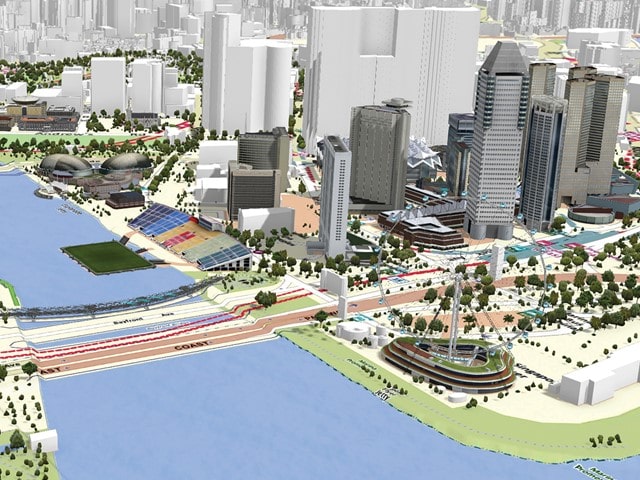
Singapore built Virtual Singapore, a full virtual replica of the city that covers buildings, roads, and public utilities, along with environmental and foot-traffic data. This digital twin is continuously updated to reflect real changes in the city, and it helps authorities with urban planning, disaster management, and resource allocation decisions.
The goal behind the project is to improve sustainability while the city adapts to a growing population within a limited territory, a problem shared by many dense cities around the world. It’s one of the largest publicly documented examples of an urban digital twin.
2. Automotive industry: BMW

BMW uses digital twins for vehicle design and production optimization. The automaker creates virtual models of vehicles during the design process, simulating thousands of variables like material stress or aerodynamics, before it becomes necessary to build and test a physical prototype.
This process enables faster design iterations and reduces investment risk, because it reveals potential problems before mass production begins, when fixing them would mean reworking entire assembly lines.
3. Healthcare and medical devices: Siemens Healthineers
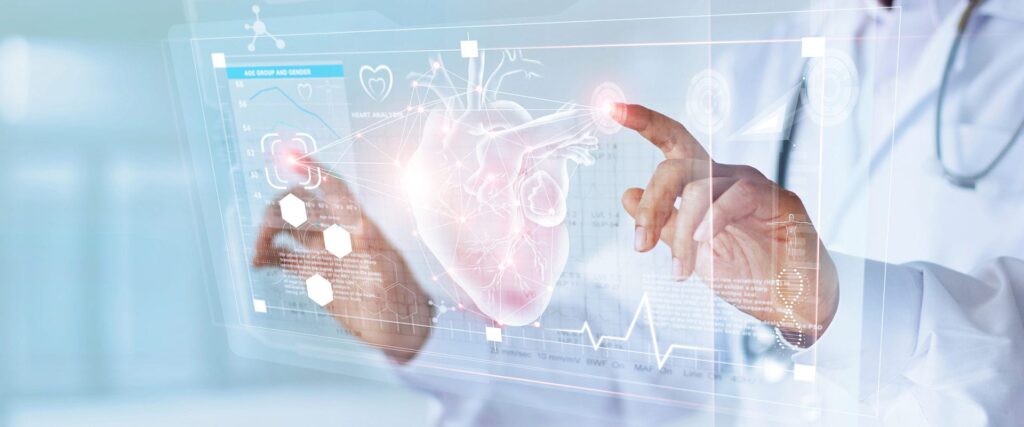
Siemens Healthineers developed a digital twin for human hearts that combines medical imaging with live patient data, aiming to deliver personalized care based on each patient’s individual needs. Surgeons can use it to test different treatment options virtually before an actual invasive procedure.
Beyond the individual-patient level, large healthcare organizations also use digital twins to analyze and optimize maintenance for their medical equipment, simulating real usage scenarios before a critical device fails.
4. Manufacturing and industrial equipment: General Electric
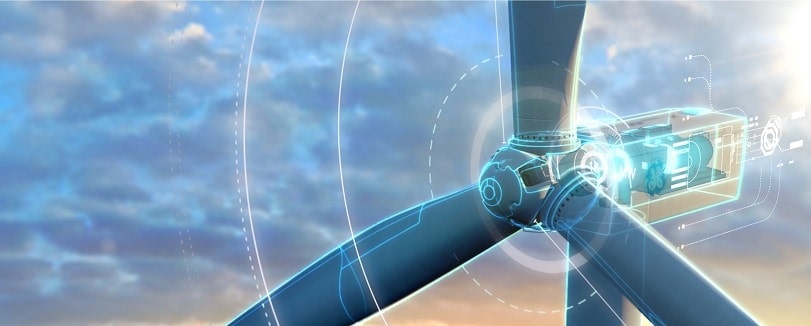
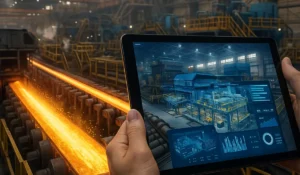
General Electric uses digital twins for predictive maintenance at its industrial facilities, building realistic simulations of equipment like turbines, compressors, and pumps. The technology lets them monitor performance in real time and make adjustments before a failure becomes costly.
This approach translates directly into cost savings and better operational efficiency, the same principle that drives digital twin adoption in industrial plants far outside the power generation sector.
5. Aerospace industry: SpaceX
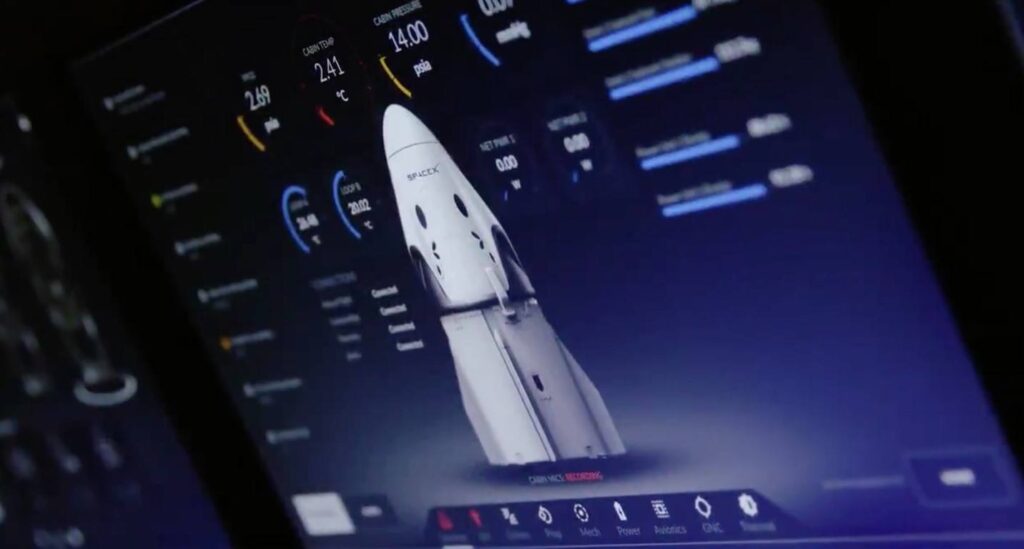
SpaceX uses digital twins to optimize rocket design and evaluate potential system failures or environmental factors that could affect a spacecraft’s trajectory during atmospheric re-entry. Simulating these scenarios lets them identify design weaknesses before committing to an actual mission.
By catching these problems in the digital twin instead of in flight, SpaceX can improve launch safety without risking the cost of an entire mission over a design flaw that wasn’t caught in time.
6. Closer to home: the Cine Metropol digital twin
Foundtech applied this same logic to the Cine Metropol renovation in Zürich, Switzerland. The team generated a digital twin of the building from 200 laser scans and drone footage, documenting the structure’s real condition before any physical intervention began on a historic building. See the full Cine Metropol case.
Unlike an entire city like Singapore or a SpaceX rocket, this is a single-building example, the scale of project most companies with real physical infrastructure need to solve first, before thinking about scaling the technology across a full portfolio.
Summary of the 6 examples
| Industry | Organization | Digital twin application |
|---|---|---|
| Government / cities | Singapore (Virtual Singapore) | Urban planning and disaster management |
| Automotive | BMW | Vehicle design and production optimization |
| Healthcare | Siemens Healthineers | Personalized treatment and equipment maintenance |
| Manufacturing / energy | General Electric | Predictive maintenance of turbines and compressors |
| Aerospace | SpaceX | Rocket design and failure evaluation |
| Heritage / construction | Foundtech (Cine Metropol) | Documentation ahead of a real renovation |
Frequently asked questions about digital twin examples
What companies use digital twins?
Organizations with publicly documented digital twin use include Singapore (at a city scale), BMW, Siemens Healthineers, General Electric, and SpaceX, each applying the technology to a different type of asset, from urban infrastructure to rockets.
What’s the most well-known digital twin example?
Virtual Singapore is probably the most cited example for its scale, being the digital twin of an entire city. In industrial settings, General Electric’s use of digital twins for predictive maintenance of turbines is among the most documented cases.
Do you need to be a large company to have a digital twin?
No. While the best-known examples come from large corporations, the technology also applies at the scale of a single building or plant, as with the Cine Metropol case. Project size determines the digital twin’s scope, not whether you can have one at all.
How do you start building a digital twin?
Most projects start with a survey of the asset’s real condition, typically through 3D laser scanning, which becomes the data foundation the virtual model is built on. From there, real-time data can be layered in depending on the use case.