Digital twin boosts efficiency at San Francisco airport
San Francisco International Airport is one of many airports that have adopted digital twin technology to improve their efficiency.
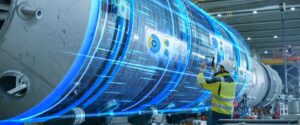
This Digital Twin technology allows companies and cities to monitor their physical assets, run simulations and predict performance.
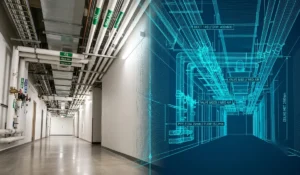
San Francisco International Airport spans more than 2,000 hectares, with 1.6 million square meters of interior space across 97 buildings, serving more than 42 million passengers last year. To keep the facilities running smoothly, airport administrators rely on a digital twin, that is, a three-dimensional virtual replica of the airport that is continuously updated with data collected by embedded sensors or other connected devices throughout the airport.
Thanks to this, the digital twin changes along with its physical counterpart in real time, making it a useful tool for studying performance, running simulations and making predictions about the physical asset it reflects.
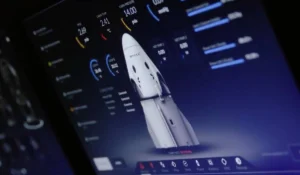
Digital twin technology is used not only to improve the efficiency of San Francisco International Airport, but also to improve the overall efficiency of land and maritime transport. For example, NASA used this technology to create a virtual model of the Columbia space shuttle after the accident that occurred in 2003. This allowed the team to simulate different scenarios before deciding which valve to close in order to limit the damage and avoid a costly delay.
In addition, the technology can also help eliminate human error by monitoring complex business processes such as orders or deliveries; reduce operating costs by optimizing resources; and improve quality by identifying potential infrastructure failures early.
The technology has been successfully implemented in several government departments, including public health, education and transportation.
Today’s digital twins are far more advanced. They not only obtain real-time data, but many also employ artificial intelligence to make predictions, such as identifying potential problems before they happen.
The technology can also eliminate the need to create physical prototypes of products such as cars, and offer a way to test different configurations for spaces such as warehouses and stores, potentially saving time and money.
SOURCE: The Wall Street Journal Written by Jackie Snow