BIM implementation guide for construction: complete methodology 2026
In summary: BIM methodology integrates data, 3D models, and collaborative processes into a single digital environment, in six steps: define objectives, build a skilled team, choose the right software, create a common data environment, start with a pilot project, and evaluate continuously. This guide walks through each step with examples from two real Foundtech projects, the Claraspital hospital in Switzerland and the Cine Metropol renovation in Zürich.
What is BIM and why it matters
Building Information Modeling (BIM) is a methodology that integrates data, 3D models, and collaborative processes into a single digital environment. This approach enables precise planning, design, and management of construction projects, optimizing resources and reducing errors. Implementing BIM is not just a technical decision, it is a strategy to transform how teams work and communicate throughout the project lifecycle.
Key steps to implement BIM in construction projects
1. Define objectives and project scope
Before starting, it is essential to set clear goals. Reducing costs, optimizing resources, or improving coordination across disciplines are different objectives that call for different decisions. These goals guide the development of the BIM Execution Plan (BEP), the strategic document that details how models and processes will be managed throughout the project.
2. Build a skilled team
Training is crucial to ensure everyone involved understands BIM tools and methodology, from architects and engineers to contractors and project managers. Fostering a collaborative mindset, not just a technical one, is what determines whether a team gets the real potential of BIM or just uses it as a more advanced drawing program.
3. Choose the right software
The choice of tools depends on the project type and its specific requirements. Revit is used for architectural modeling, Navisworks for model review and clash detection, and Civil 3D for infrastructure projects. No single software solves implementation on its own, methodology and workflow matter more than the tool selected.
4. Create a common data environment (CDE)
A Common Data Environment centralizes project information in a secure, accessible setting for all participants. This ensures everyone works with up-to-date data and reduces errors caused by miscoordination, one of the costliest problems on traditional construction projects without a centralized system.
5. Gradual implementation and pilot projects
Starting with a pilot project lets you test processes, tools, and workflows before scaling to more complex projects. Foundtech applied this same logic in the Cine Metropol renovation in Zürich, a contained project where a BIM model was built from 200 laser scans and drone footage to minimize risk before tackling more complex areas of the building. See the full Cine Metropol case.
6. Continuous evaluation and improvement
Regular reviews identify areas for improvement in the process. Gathering team feedback and adjusting workflows ensures the BIM methodology keeps delivering value throughout the project lifecycle, not just during the design phase.
What it looks like in a real project: Claraspital hospital, Switzerland
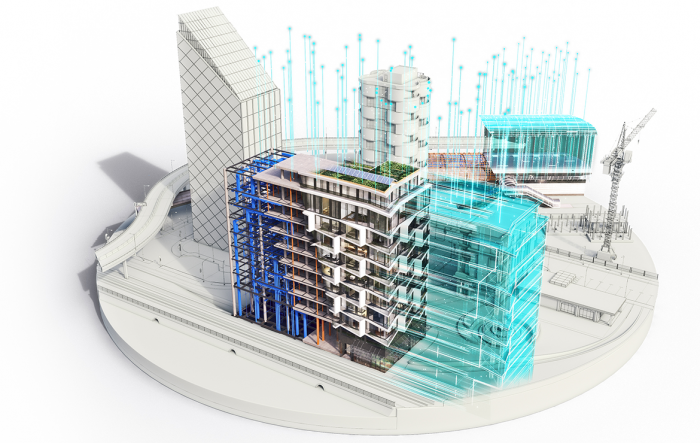
Foundtech built the digital twin of the Claraspital hospital in Basel for its full renovation. The team carried out more than 2,500 laser scans and modeled the entire existing infrastructure in BIM, including special systems such as gas, pneumatic, and liquid lines, the hardest part to document accurately in a hospital building that stays in operation.
The model allowed the renovation to be planned in an agile, precise, and collaborative way across the different teams involved, reducing costs, errors, and execution time compared to working from outdated 2D drawings. See the full Claraspital case.
Benefits of implementing BIM in construction
- Multidisciplinary coordination: makes it easier for architects, engineers, and contractors to collaborate on the same model.
- Error reduction: catches design conflicts before they turn into costly problems on site.
- Cost and time savings: optimizes resources and reduces delays, as seen in Claraspital and Cine Metropol.
- Maintenance management: the same model stays available for long-term operation and maintenance.
Lessons learned implementing BIM in construction projects
Implementing BIM is not just about adopting technology, it also transforms how teams work and collaborate. One of the most common lessons is that BIM projects fail less because of the tools and more because of inadequate training among the teams involved.
Another key point is establishing a robust common data environment from the start. Without that foundation, teams face miscoordination problems that lead to costly errors and unnecessary delays, exactly what a well-designed CDE is meant to prevent.
Companies that implement BIM successfully agree that starting with a contained pilot project, the way Foundtech did with Cine Metropol, reduces the risk of trying to scale the methodology to a large project on the first attempt. Commitment from project leadership is also essential, when leaders back the methodology, the team is more receptive to adopting it.
Frequently asked questions about BIM in construction
What is BIM and how does it work?
BIM is a collaborative methodology built around a 3D model that integrates technical, cost, and schedule information in a single digital environment. Unlike traditional CAD, which only draws geometry, a BIM model holds data that different project teams can consult, update, and coordinate in real time.
What are the main benefits of BIM in construction?
The most direct benefits are fewer design errors before reaching the site, savings in cost and execution time, and having a model that stays useful for maintenance once the project is finished. The benefit multiplies on projects with many disciplines involved, where manual coordination is more error-prone.
How long does it take to implement BIM at a construction company?
It depends on where you start. A company already working with 3D models can adopt BIM in weeks for a contained pilot project. A company starting from 2D drawings needs more time to scan or model the existing infrastructure before it can work on a reliable model, as happened at Claraspital.
Conclusion
Implementing BIM in construction projects transforms how the sector works, enabling more precise planning and more efficient execution. Following these six steps, and starting with a contained pilot project the way Foundtech did with Cine Metropol, a construction company can adopt the methodology without risking a large project on the first attempt. An accurate digital twin is also the foundation of a good predictive maintenance system, once the building or plant is in operation.