What Are Digital Twins?
A digital twin is a virtual representation of an object or system that spans its lifecycle and materials, is updated from real-time data, and uses simulation, machine learning and reasoning to support decision-making, among other excellent financial benefits.

How does a digital twin work?
A digital twin is a designed virtual model that accurately reflects a physical object or one yet to be built.
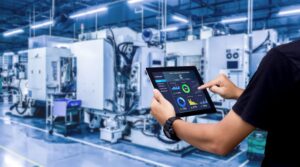
The object under study can be, for example, a wind turbine equipped with various sensors tied to vital areas of functionality. These sensors produce data about different aspects of the physical object’s performance, such as energy output, temperature, weather conditions, etc.; this data is transmitted to a processing system and applied to the digital copy.
Real-world examples of digital twin applications >>
Once informed with that data, the virtual model can be used to run simulations, study performance issues and generate potential improvements, all with the goal of producing valuable insights that can then be applied back to the original physical object, reducing risks and failures.
By having higher-quality, more granular data that is constantly updated across a wide range of areas, combined with the additional computing power that comes with a virtual environment, digital twins can study more problems from many more points of view than standard simulations, with greater potential to improve products and processes.
The next steps! Adapting companies to digital twins
Gartner predicted that by 2021 half of large industrial companies would use digital twins, translating into a 10% improvement in their efficiency.
Implementing a digital twin is not a process that can be completed overnight. In fact, it involves the complete transformation of the company. As a result, companies that decide to invest in this technology will have to face some challenges:
- Massively monitoring and digitizing industry processes that demand a strict architecture of industrial integration and automation.
- Making the leap from digital representations to managing multiple simultaneous digital copies with greater capacity to evaluate different scenarios.
- Multiplying the capacity of current data storage, management and analysis systems to handle the volume required by digital twins.
Stay tuned to our publications and discover how a digital twin works and how to implement one in your company.
Source: IBM, Gartner

Frequently Asked Questions
What is a digital twin?
A digital twin is a virtual replica of a physical object, building or system that updates with real-time data to simulate, predict and optimize its behavior. It is built from 3D scanning and BIM modeling.
What is a digital twin used for?
It lets you plan predictive maintenance, simulate scenarios before executing them, cut operating costs and make decisions based on real asset data.
What's the difference between a digital twin and a 3D model?
A 3D model is a static representation; a digital twin is fed by real-time data and evolves alongside its physical counterpart.