Digital Simulation: The Strategic Investment That Drives Business Innovation
In summary: digital simulation is a strategic investment that lets companies test scenarios, decisions, and processes in a virtual environment before risking real resources. This article explains what a digital simulator is, its main benefits, and how digital twins take simulation a step further by connecting it to real-time real-world data.
Digital simulation has established itself as a fundamental tool for companies looking to stay competitive in an increasingly changing and technological world. By integrating simulators such as digital twins into their strategies, organizations optimize their processes, make informed decisions, and foster constant innovation. In this article, we explore how digital simulation drives business innovation and why it represents an essential strategic investment for the future of companies.
What is digital simulation?
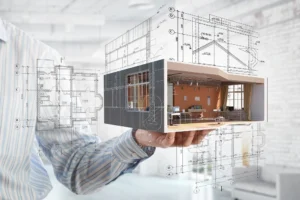
Digital simulation refers to the creation of virtual environments that replicate real business dynamics, allowing users to experiment with resource management, decision-making, and strategic planning without the risks associated with real-world situations. These environments provide interactive scenarios and instant feedback, which facilitates practical, in-depth learning.
Thanks to digital simulation, companies can experiment with different scenarios, test strategies, and anticipate outcomes without facing the dangers of acting in the real world. This is beneficial not only for employee training but also for optimizing processes and improving operational efficiency. A basic digital simulator works with historical or hypothetical data; when that same simulator connects to a real physical asset through sensors, it becomes a digital twin, as explained in the next section.
Benefits of digital simulation for companies
Implementing digital simulation in a company’s processes brings multiple strategic benefits. Among the most important:
- Better decision-making: simulators provide an environment where users can experiment with decisions without real consequences, fostering more informed and strategic decision-making.
- Risk reduction: allows companies to test different strategies without the financial or operational risks of the real world, minimizing the negative consequences of wrong decisions.
- Continuous innovation: by experimenting with new processes or products in a virtual environment, companies can innovate continuously without risking resources or time on physical production.
- Process optimization: simulators offer the ability to quickly adjust operations, leading to greater efficiency and reduced costs.
The role of digital twins in business innovation
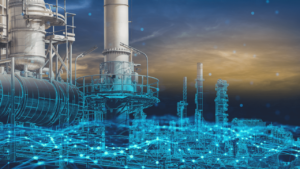
Digital twins are virtual replicas of physical objects, systems, or processes that are updated in real time using data collected through IoT sensors and advanced technologies such as artificial intelligence and machine learning. This ability to reflect the real state of an object or process enables more precise simulations and operational optimization without physical intervention.
The relationship between digital twins and digital simulation is fundamental to business innovation. Digital twins don’t just replicate processes in real time, they also allow companies to simulate future situations and predict outcomes, giving them a significant competitive advantage by anticipating potential problems before they occur. Foundtech applied this principle at the Früh Verpackungstechnik AG plant in Switzerland, where the digital twin generated from 3D laser scanning made it possible to simulate the packaging plant’s expansion using real site data, instead of outdated blueprints. See more of Foundtech’s real projects.
How digital twins drive innovation
- Real-time simulation: unlike traditional simulations, which rely on static data, digital twins enable dynamic simulations that adapt to changing environmental conditions. This helps companies experiment with different scenarios and get more realistic results.
- Process optimization: digital twins make it easier to identify inefficiencies and potential problems before they happen. This lets companies make proactive adjustments to their operations, improving operational efficiency and reducing costs.
- Fostering innovation: digital twins provide a safe environment to experiment with new designs, processes, and products. This reduces the risk associated with innovation, letting companies test new ideas before implementing them in the real world.
- More informed decision-making: real-time data integration provides valuable information that lets business leaders make better-grounded, more precise strategic decisions.
You might be interested in: How will Digital Twins change manufacturing?
Practical applications of digital twins
Digital twins have applications across multiple industries, each with a specific focus:
- Manufacturing: used to optimize production, reduce downtime, and improve product quality.
- Energy: allow more efficient management of power grids and consumption forecasting, detecting problems before they become crises.
- Healthcare: digital twins can create personalized care plans based on real-time data, improving prevention and treatment.
Traditional digital simulation vs. digital twin
| Feature | Traditional digital simulation | Digital twin |
|---|---|---|
| Data source | Historical or hypothetical | Real asset sensors, in real time |
| Updates | Manual, by version | Continuous and automatic |
| Accuracy | Depends on how good the assumptions are | Reflects the real state of the asset |
| Best use | Exploring broad hypothetical scenarios | Decisions about a specific physical asset |
Frequently asked questions about digital simulation
What is a digital simulator?
It’s software that recreates a real environment, process, or system in a virtual space, allowing decisions and scenarios to be tested without the costs or risks of doing so in the physical world. It can run on historical data, hypothetical data, or real-time real data when connected to a digital twin.
What’s the difference between a digital simulator and a digital twin?
A digital simulator typically works with static or hypothetical data to explore general scenarios. A digital twin is a specific type of simulation that stays synchronized in real time with a real physical asset through sensors, making it more precise for decisions about that particular asset.
What is digital simulation used for in a company?
It’s used to test decisions, processes, or investments before committing to them in the real world, reducing financial and operational risk, accelerating innovation, and giving leadership teams more precise information to decide with.
Conclusion
Digital simulation and digital twins represent strategic investments that drive business innovation. By offering virtual environments to simulate, analyze, and optimize operations in real time, these technologies let companies make more informed decisions, reduce costs, and foster innovation. In an increasingly competitive and dynamic business environment, implementing these tools is essential to stay ahead and ensure long-term success.