Digital Twin IoT: How Digital Twins and IoT Work Together
In summary: Digital twin IoT is the combination of a virtual replica of a physical asset with the live data its IoT sensors produce. The sensors report what is happening (temperature, vibration, flow, energy use), and the digital twin places that data on an accurate model of the asset so teams can monitor it remotely, predict failures and test changes before touching the real plant. Without IoT the twin is a static model; without the twin, IoT is a stream of readings with no spatial context.
When the operators of the Werdhölzli wastewater treatment plant in Switzerland began planning its modernization, they found they had no updated drawings or engineering records for a facility full of piping, tanks and structures. That is a common starting point, and it explains why so many IoT initiatives stall: you cannot connect thousands of sensor readings to a model of a plant that does not match the plant. This article explains how digital twins and IoT work together, layer by layer, and why the geometric foundation matters as much as the sensors.
We cover what each technology does on its own, the real difference between them, the architecture that connects them, the use cases where the pairing pays off, and the challenges you should plan for before buying hardware or software. If you are evaluating an IoT project for an industrial plant, a hospital or a large building, the sections below will help you scope it in the right order.
What digital twin IoT actually means
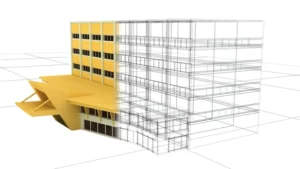
A digital twin is a virtual representation of a physical asset, system or process that mirrors its structure and, when connected to live data, its behavior. It can describe a single pump, a production line, a hospital wing or an entire treatment plant. What separates a digital twin from an ordinary 3D model is that it stays synchronized with the real asset over its life cycle, so the information it holds keeps reflecting current conditions.
The Internet of Things (IoT) is the network of connected sensors, meters, controllers and devices that capture physical variables and transmit them over a network. In an industrial context that means vibration sensors on motors, flow meters on pipes, temperature probes in electrical rooms or energy meters on HVAC equipment. IoT answers the question “what is happening right now,” but on its own it does not say where, in relation to what, or what will happen next.
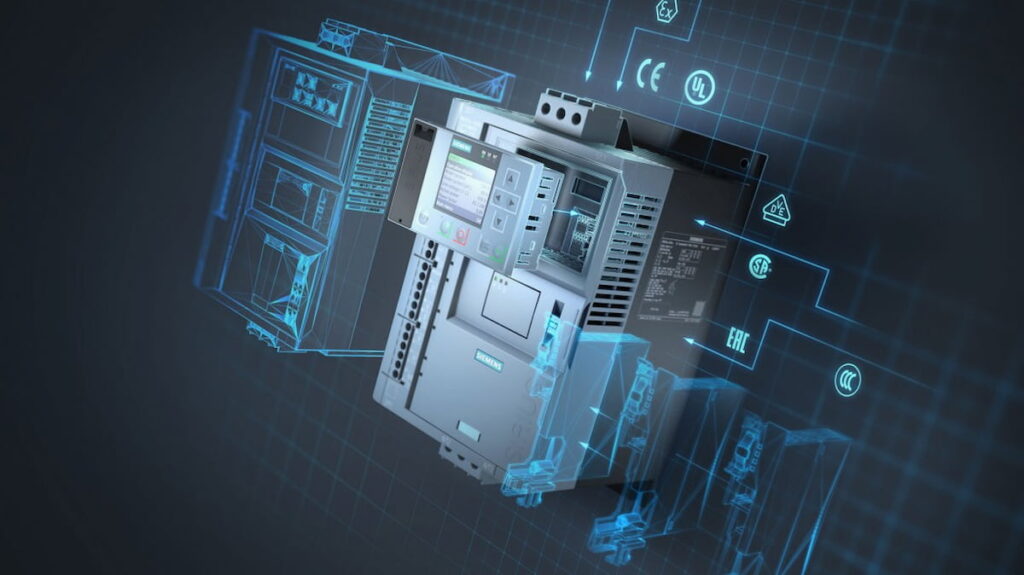
Digital twin IoT is the integration of both: IoT supplies the live signal and the digital twin supplies the context, the history and the ability to simulate. That pairing is why the two terms appear together so often, and why treating them as competing technologies leads to poorly scoped projects.
Digital twin vs IoT: the difference in one table
The question of the difference between digital twin and IoT comes up constantly because both are sold under the same “smart operations” label. The simplest way to separate them is by the job each one does. IoT is the sensing and communication layer; the digital twin is the representation and decision layer that consumes what IoT produces.
| Aspect | IoT | Digital twin |
|---|---|---|
| Main function | Capture and transmit physical data | Represent the asset and interpret its data |
| What it produces | Time series of readings (temperature, vibration, flow) | A model with geometry, attributes, history and state |
| Key question it answers | What is happening now? | Where, why, and what happens if we change something? |
| Typical components | Sensors, gateways, networks, IoT platforms | 3D/BIM model, asset data, analytics and simulation |
| Value on its own | Alerts and dashboards without spatial context | An accurate but static record of the asset |
| Value combined | Live monitoring located on the real asset, failure prediction and scenario testing | |
In practice, an organization can deploy IoT without a digital twin, and it can build a digital twin without IoT. The second option is more common than people assume: a detailed BIM model generated from a laser scan is already a digital twin of the asset’s condition, and it becomes a live twin later, once sensors are connected to it.
How digital twins and IoT work together: the four layers
Every IoT-powered digital twin, regardless of the vendor or industry, follows the same basic flow. Data moves from the physical asset to the model and, in mature implementations, decisions move back from the model to the asset. Understanding these layers helps you identify which ones you already have and which ones are missing.
- Physical asset and sensing: the equipment, the building or the plant, instrumented with IoT sensors that measure the variables relevant to its operation.
- Connectivity and data ingestion: gateways and networks carry the readings to an IoT platform or data system, where they are cleaned, time-stamped and stored.
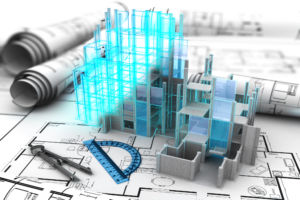
- The twin model: an accurate representation of the asset, usually a BIM or 3D model built from a laser scan, where each sensor is linked to the specific component it measures.
- Analytics, simulation and action: rules, statistical models or machine learning detect anomalies, predict failures and simulate scenarios, and the results are returned to operators or control systems.
Layer three is where many projects underestimate the work. A sensor reading tagged “Pump 4” is only useful if the model knows exactly where pump 4 is, what pipe feeds it, which valve isolates it and what equipment surrounds it. If the model is based on outdated drawings, the twin will place live data on the wrong geometry, and operators will stop trusting it quickly.
Where digital twin IoT delivers value
The combination is useful wherever an asset is expensive to stop, difficult to inspect in person or complex enough that problems are hard to locate. The following use cases are the ones where the pairing consistently justifies the investment.
Real-time monitoring and predictive maintenance
IoT sensors on rotating equipment, electrical panels or pumps record vibration, temperature and load continuously. The digital twin compares those readings with the expected behavior of each component and flags deviations before they become failures. Maintenance shifts from fixed calendars or emergency repairs to interventions scheduled according to the actual condition of the equipment.
The twin adds something a sensor dashboard cannot: location and dependencies. When an alert appears, the maintenance team sees the component in its real position, along with the systems connected to it, which shortens diagnosis and reduces the risk of isolating the wrong line. If you are estimating this kind of program, our guide on how much predictive maintenance costs in Mexico breaks down the budget items.
Remote monitoring of distributed assets
Wind farms, water networks, pipelines and multi-site operations share a problem: physically inspecting every asset is slow and expensive. Connecting each asset’s sensors to its digital twin allows a central team to review health, output and alarms for the entire portfolio from a single location, and to send crews only where the data justifies a visit.
This approach also improves the quality of field visits. A technician who opens the twin before leaving knows the layout, access routes and equipment details of the site in advance, which matters especially in facilities with confined spaces or restricted areas.
Simulation before changing the physical plant
Once a twin combines accurate geometry with real operating data, it becomes a safe environment for testing changes. Engineers can evaluate a new production layout, an equipment replacement or a different operating setpoint using historical IoT data as the baseline, and compare results before committing time and money on site.
This is particularly valuable during modernizations and expansions, where a design error discovered during construction can stop operations. Simulating against a model that reflects the facility as it actually exists, rather than as it was originally designed, removes a large share of that risk.
Building and facility operations
In hospitals, hotels, corporate buildings and distribution centers, IoT meters and building automation systems track energy use, air quality, occupancy and the status of critical equipment. Linked to the building’s twin, that data shows which zone, floor or system is consuming more than expected, and helps facility managers prioritize interventions with evidence.
For buildings that cannot stop, such as hospitals, the twin also supports continuity planning: knowing exactly where critical lines run and what each one feeds makes it possible to respond faster when something fails. We explore that scenario in our article on hospital operational continuity with a digital twin.
The step most IoT projects skip: an accurate base model
At Foundtech we work on the layer that IoT platforms take for granted: the geometric and asset model that live data has to land on. In the Werdhölzli wastewater treatment plant project, the absence of updated drawings and engineering records made a traditional survey too slow for the modernization schedule. We scanned the plant to generate a navigable 3D visualizer and modeled all operational systems and subsystems, including piping, tanks and structures, in BIM from the point clouds.
That model allowed the architects and engineers to plan and execute the modernization with documented savings in time and cost, and it leaves the plant with a digital twin ready to be used for maintenance, logistics and asset management. In IoT terms, it is the foundation onto which sensor data can be mapped component by component, because every pipe and tank in the model corresponds to one that exists on site.
A similar logic applied at Migros Millas, a facility of approximately 11,000 m² digitized together with our sister company BIM Facility AG. The client needed to improve maintenance and plan expansions but lacked documentation of its piping and electrical installations. Interior laser scans and drone captures produced a detailed digital twin that the different suppliers could use in a shared BIM environment to define a maintenance and expansion plan.
If you already have a BIM model and plan to connect sensors to it, check first whether it was built from measurement or from old drawings. Our article on the 5 signs your BIM model is not ready to power a digital twin describes how to evaluate it.
Challenges of integrating digital twins and IoT
The benefits are real, but an IoT-powered digital twin is an integration project, not a product you install. These are the points that most often delay implementations or reduce their value once they are running:
- Data security: every connected sensor is a potential entry point, so the data path from device to twin needs encryption, access control and network segmentation.
- Interoperability: sensors, PLCs and building systems from different manufacturers use different protocols, and normalizing them is often the most time-consuming part of the project.
- Data quality: uncalibrated sensors, gaps in transmission and inconsistent naming produce a twin that generates false alarms.
- Model accuracy: live data mapped onto a model that does not match the real asset produces wrong locations and wrong conclusions.
- Computing capacity: large or real-time twins may need a mix of edge processing near the sensors and cloud processing for analytics and storage.
The practical recommendation is to sequence the work: first secure an accurate model of the asset, then connect a limited set of critical sensors, validate that alerts are reliable, and only then scale to the rest of the facility. Starting with the sensors and leaving the model for later usually means redoing the mapping.
For existing infrastructure, the scan-to-BIM step is what turns a facility with incomplete records into one that can host a reliable twin. We explain when that investment pays for itself in Scan to BIM for infrastructure maintenance, and you can see more digital twin examples across industries in our article on real-world examples of digital twins.
Frequently asked questions about digital twin IoT
What is the difference between digital twin and IoT?
IoT is the network of sensors and devices that measures physical variables and transmits them. A digital twin is the virtual replica of an asset that organizes, locates and interprets that data, and can simulate what would happen under different conditions.
Put simply, IoT tells you what is happening and the digital twin tells you where it is happening, why it matters and what to do next. They are complementary layers of the same system, not alternatives.
What is a digital twin in IoT?
In an IoT architecture, the digital twin is the layer that represents each connected asset and keeps its state synchronized with the readings from its sensors. It acts as the reference model against which data is compared to detect anomalies.
Without that layer, IoT data usually ends up in dashboards organized by sensor ID, which makes it hard to understand how a reading relates to the rest of the facility or to the equipment around it.
Can a digital twin work without IoT sensors?
Yes. A digital twin built from a laser scan and a BIM model already documents the real condition of an asset, which is enough for planning renovations, expansions, inspections and asset management. Many organizations start at this stage.
Connecting IoT sensors later converts that static twin into a live one. Starting with an accurate model makes the sensor integration faster, because each device can be assigned to a component that already exists in the model.
Is an IoT-powered digital twin only for large industrial plants?
No. The same approach applies to hospitals, hotels, office buildings, data centers and distribution centers, wherever downtime is costly or equipment is hard to inspect. The scale of the project changes, but the four layers remain the same.
For smaller facilities, a sensible approach is to connect only the critical systems first, such as electrical rooms, chillers or pumping stations, and expand once the first results have been validated.
Start with the model your sensors will depend on
Digital twin IoT delivers its value when live data lands on a model that faithfully reflects the asset. If your facility lacks updated drawings, or if you are unsure whether your current model can support sensor integration, the first step is a survey of the real condition of the infrastructure.
At Foundtech we generate that foundation through 3D laser scanning and BIM modeling for digital twin projects in Mexico and Switzerland. Schedule a diagnosis and we will review your facility and the scope your IoT project actually needs.