History of digital twins: from Apollo 13 to Industry 4.0
In summary: the history of digital twins begins in the aerospace industry of the 1970s, is formalized as a concept in 2003, and today is a core technology of Industry 4.0 thanks to IoT and data analytics. This article traces that full path, from the aerospace origin to current applications, with a timeline, real examples from Foundtech projects, and the key differences between a digital twin and other digital tools.
In the world of industry, technology continues to advance by leaps and bounds. One of the most influential concepts in this process is the digital twin, a virtual replica of a physical object, process, or system that is already transforming how entire infrastructures are designed, operated, and maintained. Understanding its history helps explain why it is one of the most impactful technologies in manufacturing, construction, and asset operations today.
The past: the origins of digital twins
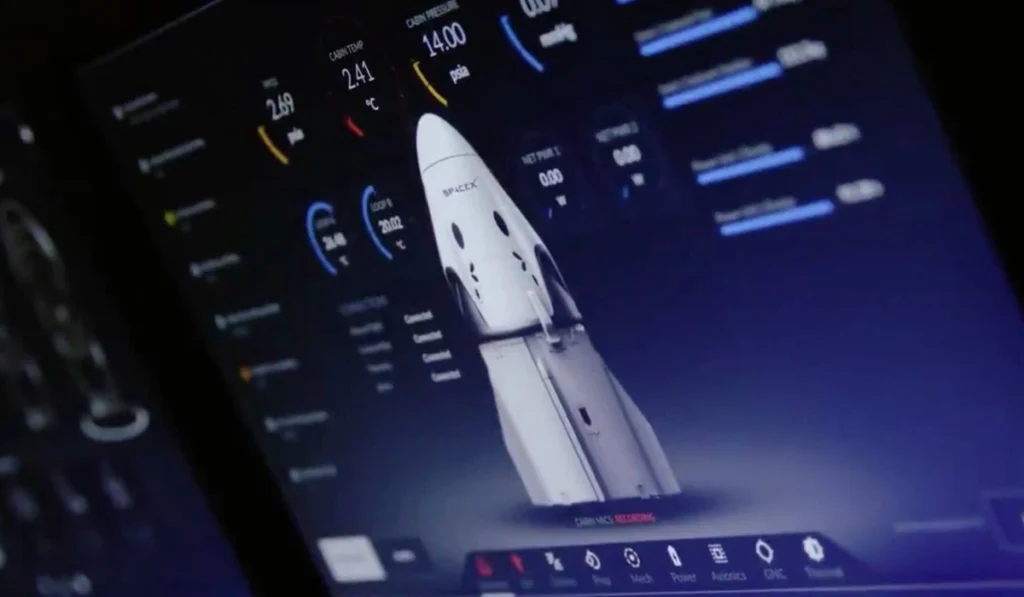
Although the concept may seem recent, the history of digital twins goes back decades. The earliest digital models emerged in the aerospace and automotive industries in the 1970s and 1980s, used mainly for simulations of complex systems where a physical failure was too costly or dangerous to test directly.
The most cited foundational case happened in 1970, during the Apollo 13 mission. When carbon dioxide levels aboard the spacecraft reached dangerous levels, NASA’s team in Houston used simulations with the same materials available on board to design an improvised oxygen purification system, then transmitted instructions for the astronauts to build it in space. That exercise of simulating solutions on the ground before applying them on the real spacecraft is, in essence, the principle behind any digital twin today.
The term “digital twin” itself did not become popular until 2003, when engineer Michael Grieves introduced it at a conference on product lifecycle management (PLM) at the University of Michigan. These early digital twins laid the groundwork for the concept, but their scope was limited compared to current capabilities, they relied on static simulations, not real-time data.
| Period | Milestone | What changed |
|---|---|---|
| 1970s-80s | First aerospace simulations (NASA, Apollo 13) | Static digital models used to simulate solutions before applying them physically |
| 2003 | Michael Grieves coins the term “digital twin” | The concept is formalized within product lifecycle management (PLM) |
| 2010s | IoT and Big Data consolidation | Digital twins begin integrating real-time data, not just simulations |
| Today | Industry 4.0, AI, and accessible 3D scanning | Digital twins are applied to buildings, industrial plants, and full infrastructure |
The present: applications and benefits
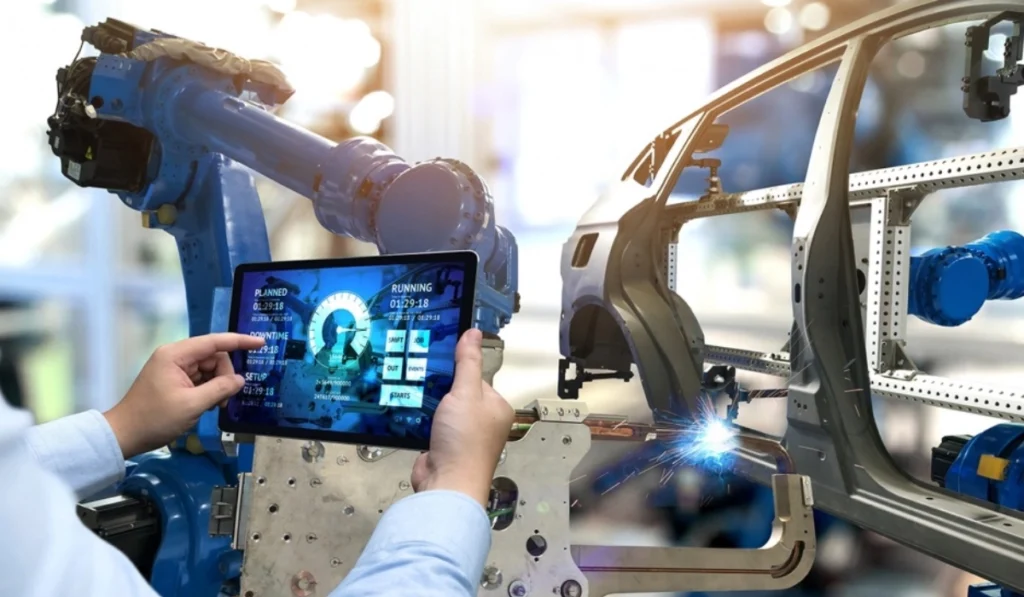
Today’s digital twins can accurately capture even the most intricate details of a physical object or complex process, and integrate real-time data to offer a dynamic view of reality, not just a static snapshot of the moment the data was captured. This leap was made possible by the consolidation of the Internet of Things (IoT) within Industry 4.0 and advances in storing and analyzing large volumes of data.
Today, digital twins have applications across a wide range of industries, from manufacturing and construction to healthcare and transportation. They allow teams to predict how a system will behave and make decisions ahead of time to correct errors before they happen, instead of reacting after the fact, the same principle behind the Apollo 13 simulation exercise, now applied at industrial scale with continuous data.
Among the most direct benefits of a digital twin are:
- More informed and agile decision-making, based on real asset data
- Smoother collaboration between geographically dispersed teams working on the same model
- Early detection of failures and risks before they become costly problems
- A reliable data foundation for long-term maintenance, renovation, and planning
- New business opportunities and service models built on asset data
What it looks like today: Foundtech digital twins in real projects
That same logic, modeling with precision before intervening, is what Foundtech applied at the Werdhölzli wastewater treatment plant in Switzerland. The team generated a complete digital twin of the existing infrastructure using 3D laser scanning, a real data foundation on which the plant’s redesign was planned, instead of working from outdated documentation. See the full Werdhölzli case.
The same approach was applied at Claraspital hospital in Basel, where more than 2,500 laser scans made it possible to model the entire infrastructure in BIM, including special systems such as gas and pneumatic lines, to plan a full renovation without stopping hospital operations. See the full Claraspital case. These projects show the same principle that gave rise to the concept at NASA more than fifty years ago, having a reliable model of the real system before intervening, applied today to buildings and industrial plants instead of spacecraft.
What is (and isn’t) a digital twin
A common confusion is treating any 3D model as a digital twin. It isn’t. A static 3D model, an as-built plan, or a BIM model are all valuable inputs, but a true digital twin is distinguished by maintaining an active connection to the real asset, either through periodic updates or real-time sensor data.
| Tool | What it represents | Updates with the real asset |
|---|---|---|
| Static 3D model | The object’s geometry at a given moment | No, it’s a fixed snapshot |
| As-built plan | The real conditions of a finished construction | No, unless a new survey is generated |
| BIM model | Integrated technical and geometric project information | Partially, depending on the data management process |
| Digital twin | A virtual replica connected to the real asset’s behavior | Yes, through updated data or sensors |
The future: challenges and opportunities
As digital twins evolve, they face real challenges. One of the main ones is interoperability between different platforms and systems, since data must flow securely between the physical and virtual worlds without losing precision along the way. Data privacy and security are also growing concerns as the volume of information collected and shared between teams and vendors keeps increasing.
Despite these challenges, digital twin adoption keeps growing, driven by advances in IoT, cloud computing, and data analytics. As these tools become more accessible, it’s likely we’ll see a proliferation of use cases in sectors that have adopted them less so far, such as retail, education, and hospitality, following the same expansion pattern already seen moving from aerospace to manufacturing and now to construction.
The history of digital twins connects the industry’s past and future in a way that’s rare in technology: the same principle that solved an emergency in space in 1970 is today the basis of how Foundtech helps industrial plants and hospitals plan with precision before intervening. That same model is also the foundation of a good predictive maintenance system and of a solid BIM methodology implementation once the asset is in operation.
Frequently asked questions about digital twins
What are digital twins?
A digital twin is a virtual replica of a physical object, process, or system that stays connected to that asset’s real behavior through updated data or sensors. Unlike a static 3D model, a digital twin changes along with the real asset, it doesn’t stay frozen at the moment it was created.
What is the origin of digital twins?
The concept originated in the aerospace industry in the 1970s, with the simulations NASA used during the Apollo 13 mission to solve an onboard emergency from the ground. The term “digital twin” itself was coined in 2003 by engineer Michael Grieves.
What’s the difference between a digital twin and a BIM model?
A BIM model integrates technical and geometric information for a construction project, but it doesn’t necessarily stay updated with the asset’s real condition after completion. A digital twin goes a step further, maintaining an active connection to the real asset over time, either through periodic updates or real-time sensor data.
Which industries use digital twins today?
The industries with the highest adoption are manufacturing, construction, healthcare, and transportation, though use is expanding into sectors like retail, education, and hospitality. Any industry with complex, costly-to-maintain physical assets is a candidate to benefit from this technology.